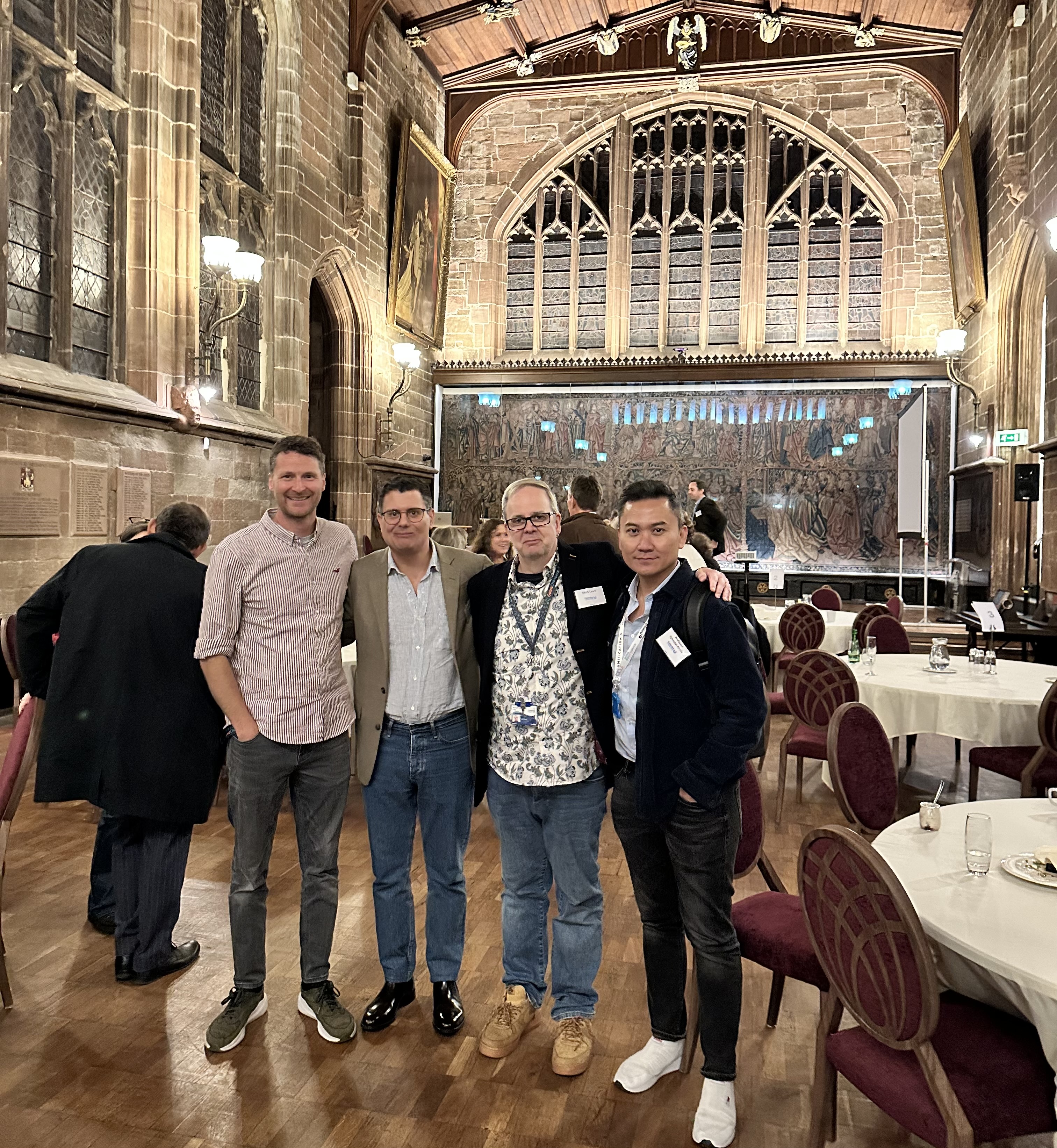
As we come to the end of 2025, we are reflecting on a year that has been firmly grounded in community-engaged practice, care-centred research, and the continued development of playful and frugal design as a serious research methodology.
This year, our work has not been defined by scale alone, but by depth of engagement. Across disability inclusion, arts-based environmental work, and educator-focused innovation, we have continued to work with communities, foregrounding lived experience, agency, and shared authorship.
FAiR: Arts, Environment, and Community-Led Storytelling
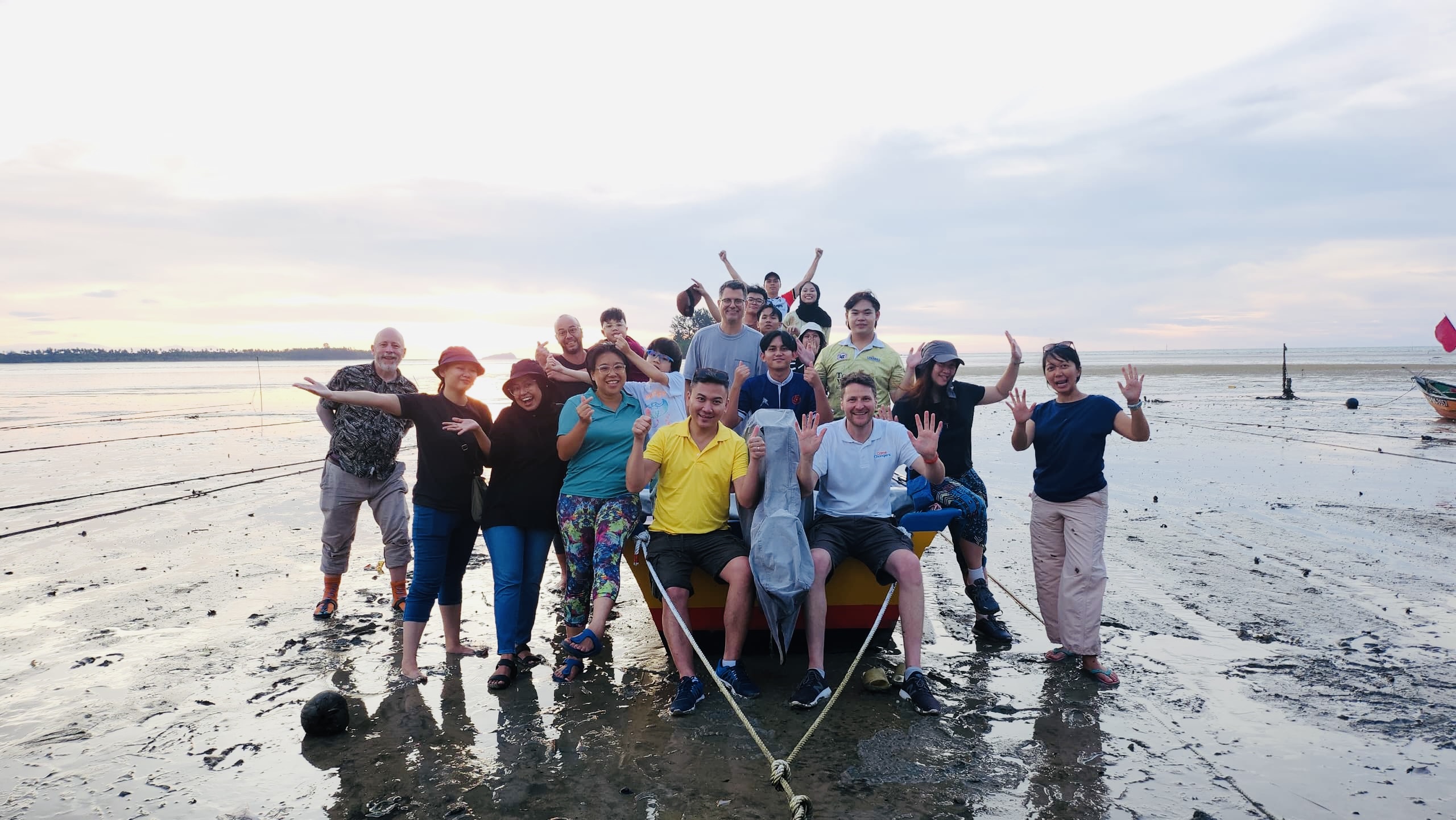
One of the defining highlights of 2025 has been the continued evolution of FAiR (Frugal Artist-in-Residence), which has grown into a powerful platform for art-science-play collaborations rooted in place, culture, and environmental care.
Through co-creation with artists, volunteers, researchers, and communities in Sarawak, FAiR has translated local ecological knowledge into murals, installations, and public exhibitions. Resonance: Echoes of Nature, hosted in Kuching, brought together artworks, community artefacts, and participatory activities that invited reflection on rivers, biodiversity, and everyday stewardship through playful and frugal making. Kudos to the local FAiR Team led by Dr. Jacey-Lynn Minoi.
Importantly, FAiR is not a one-off intervention. Looking ahead, we will replicate and expand this exhibition in the UK in 2026, creating new opportunities for cross-cultural dialogue, public engagement, and collaborative making between our Malaysia partners and UK communities. This next phase will allow us to further explore how playful artistic practices can support environmental awareness, inclusion, and civic imagination across contexts.
BRIDGE-HE: Building Inclusive Research Cultures in Indonesia
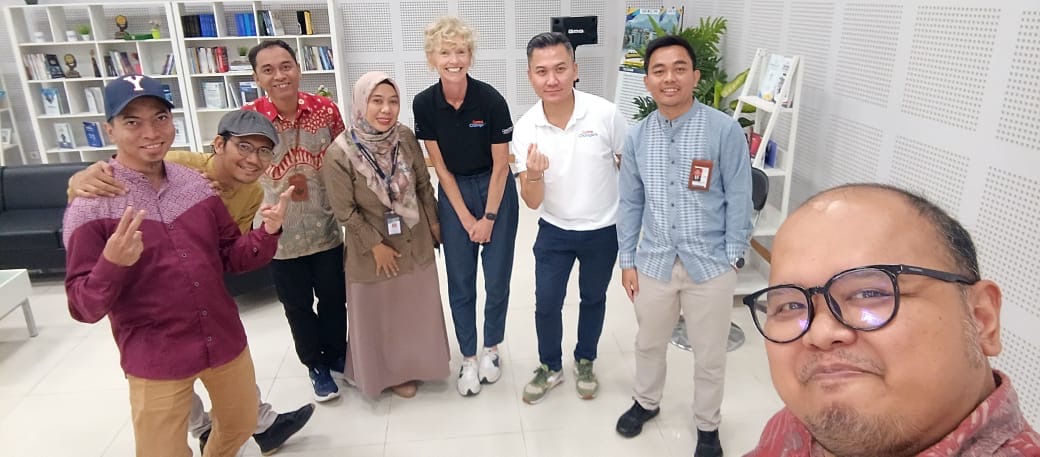
Another central pillar of our 2025 work has been BRIDGE-HE (Building Disability-Inclusive Research Culture in Indonesian Higher Education).
This year, we delivered playful participatory workshops with students and staff at Universitas Tidar and Universitas Negeri Malang, focusing on surfacing lived experiences of disability across the student and research journey. Using accessible tools, storytelling, empathy mapping, and collective reflection, the workshops enabled participants, especially disabled students, to articulate structural barriers and imagine more inclusive research cultures.
These workshops marked an important shift from planning to practice, reinforcing our long-standing commitment to community-engaged and ethically grounded research. The visit and its reflections are documented in more detail in my previous post, Building Inclusive Research Cultures in Indonesia, which captures both the challenges and the shared sense of possibility emerging from this work.
RE:PLAY: Advancing Playful Research in Higher Education
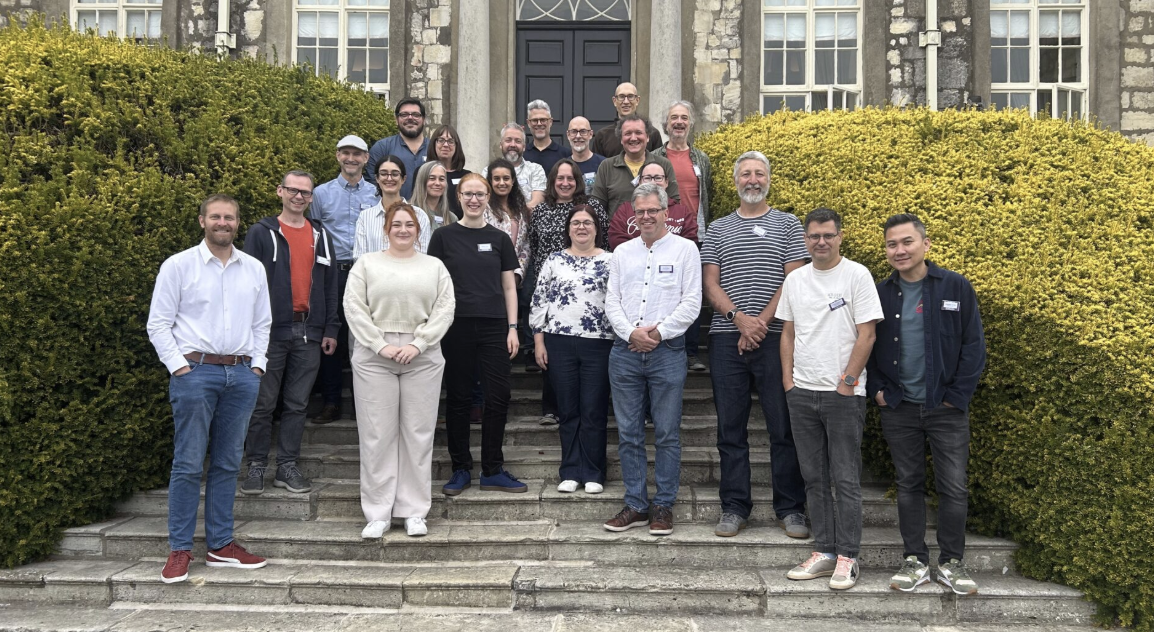
In parallel with our international community work, 2025 has also marked strong progress on RE:PLAY
(Researching the Effectiveness of Playful Learning in Higher Education), a major ESRC-funded programme led by Prof. Nicola Whitton at Northumbria University.
RE:PLAY brings together a UK-wide consortium of universities to examine how playful approaches such as role-play, simulations, design challenges, and games can support student creativity, motivation, belonging, resilience, and academic achievement in higher education. Within this programme, the Coventry University team has contributed methodological expertise in ludic design, playful pedagogy, and student-centred research, working closely with module leaders across the institution.
During 2025, we progressed well with RE:PLAY, moving from programme launch into active engagement with educators and modules, supporting the project’s multi-case study approach. Our involvement has focused on translating playful design principles into real teaching contexts, while also generating empirical insights into how play operates as a mechanism for engagement, reflection, and learning at scale.
RE:PLAY complements our wider Ludic Design agenda by strengthening the evidence base for playful approaches in higher education, while remaining attentive to issues of inclusion, disciplinary diversity, and institutional context. It also provides an important bridge between our community-engaged international work and UK-focused research on educational transformation.
AI, Play, and Educator Agency: A Strategic Strand
Alongside this community-centred work, 2025 has also seen the continued development of our AI and education research strand, led by Dr. Petros Lameras.
Through projects such as GameAid and PlayBook, this strand explores how playful and game-based approaches can support educators to engage critically and creatively with Generative AI. Rather than positioning AI as a purely technical intervention, this work foregrounds reflection, ethics, and human judgement, enabling teachers to explore how AI intersects with pedagogy, professional identity, and values.
This strand will continue to grow in 2026, strengthening our contribution to debates around human-centred AI, teacher agency, and responsible innovation through playful design.
Growing the Next Generation: PhD and Early Career Research Success
Supporting PhD and early career researchers is central to our Ludic Design ethos. In 2025, several doctoral projects connected to our community reached important milestones and gained wider recognition.
Juliana Samson’s research on AI-generated virtual patients was featured by the BBC, highlighting how playful simulation and human-centred AI can enhance medical training. Tjasa Savoric, a CU–Deakin cotutelle researcher, won both the Judges’ Award and People’s Choice Award at Deakin University’s Three Minute Thesis competition for her work on using gamified VR to reduce stress and anxiety in intensive care.
We also saw strong methodological contributions from Frederick (Willie) Knoetze, whose article introducing the Integrated Analysis Matrix (I-AM) was published in the International Journal of Qualitative Methods. The framework strengthens rigour and transparency in practice-led and AI-assisted qualitative research, aligning closely with our community-engaged and ludic research approaches. Alongside this and as part of his visit to Coventry (Willie is based in South Africa under the Coventry-Stellenbosch dual award), Willie led an eight-session workshop series on tabletop role-playing games as a method of inquiry, using collaborative storytelling and play as vehicles for interdisciplinary research and reflection.
Within Coventry University, Jaimz Winter was shortlisted as a finalist for PGR of the Year for his research on user-centric privacy controls in video games, while our supervisory team was nominated for Outstanding Supervisory Team of the Year. Alongside these successes, we continued to host visiting and Erasmus researchers, supporting hands-on engagement with playful methods, co-design, and community-engaged practice.
Together, these achievements reflect our commitment to nurturing the next generation of researchers through inclusive, supportive, and values-driven supervision and collaboration.
Publications in 2025: Depth, Breadth, and Collaborative Scholarship
Alongside projects and partnerships, 2025 has been a particularly productive year for Ludic Design scholarship. Across the year, we contributed to over 10 peer-reviewed publications, including journal articles, book chapters, systematic reviews, editorials, and conference proceedings. These outputs span education, disability studies, AI and XR, healthcare, cultural heritage, data literacy, and social justice, and reflect wide-ranging international collaboration with colleagues across the UK, Europe, Southeast Asia, and Australia.
While diverse in topic and method, our publications are united by a shared commitment to playful, human-centred, and community-engaged research.
Three publications in particular capture the depth of our 2025 contribution:
Published in Qualitative Research, this paper articulates a playful, frugal, and co-creative framework for community-engaged research, grounded in long-term work across Indonesia, Malaysia, and Vietnam. It advances a coherent methodological position for conducting ethical, inclusive, and impact-oriented research with communities, rather than on them.
Published in Social Sciences & Humanities Open, this article consolidates insights from GameChangers and ACES, proposing a value-based design lens that links playful values with frugal principles. It offers practical guidance for educators designing inclusive STEM learning under real-world constraints and has become a key reference point for our work on value-based design.
Published in the International Journal of Serious Games, this paper demonstrates how escape room design can be used to address racism and social justice through carefully structured playful experiences. Drawing on mixed-methods data from multiple case studies, it shows how ludic methods can support critical reflection and dialogue on sensitive societal issues.
Beyond these flagship contributions, our 2025 publications also include work on virtual reality for autism and healthcare, XR for cultural heritage and tourism accessibility, data literacy and citizen engagement through games, privacy in video games, and open-source gamification tools, reinforcing the interdisciplinary and applied nature of Ludic Design research.
Taken together, this body of work reflects not only productivity, but a maturing research agenda that connects theory, method, and practice, and that continues to position Ludic Design as a rigorous and socially responsive field of inquiry.
Public Engagement, Policy, and Profile
In 2025, Ludic Design and the wider GameChangers community continued to engage audiences beyond academia, with increasing visibility across policy, practice, and public platforms.
We were invited to the House of Commons to attend the launch of the Young Entrepreneurship Programme, hosted by Lord Iain McNicol on behalf of ZIYX. The event brought together policymakers, industry leaders, and educators to explore how game-based and experiential approaches, including ZIYX’s digital application for developing entrepreneurial knowledge and skills, can support youth enterprise and future-ready capabilities. The invitation provided a valuable opportunity to engage in dialogue around innovation, inclusion, and the role of playful design within emerging entrepreneurial ecosystems.
Internationally, our long-standing collaboration with Malaysia continued to deepen. Proud to be invited for the second time to speak at an international conference co-organised by the Ministry of Education, Innovation and Talent Development (Sarawak, Malaysia), where we shared insights from our community-engaged and game-based research across Southeast Asia.
Our public engagement also extended to national media. The FAiR project was featured on Malaysia’s national breakfast television programme, Apa Khabar Malaysia (Bernama TV), helping to bring conversations around environmental awareness, sustainability, and community-led creative practice to a wider public audience.
In 2025, our international engagement also extended to Germany. Invited by British Council Germany to speak at Serious Games Maker Days in Chemnitz, part of the European Capital of Culture Chemnitz 2025 programme. The keynote, Purposeful Play: Community-Engaged by Design, shared insights from Ludic Design and GameChangers on how playful and frugal approaches can support co-creation, equity, and values-led innovation, while the wider programme created space for dialogue with developers, educators, and researchers across Germany and Europe.
Together, these engagements reflect how Ludic Design research is increasingly present within policy conversations, public discourse, and international dialogue, while remaining grounded in community-engaged values.
Looking Ahead: Sustaining Momentum and Expanding Ludic Design
As we move towards the end of 2025, our focus is not on winding down, but on sustaining momentum across a growing portfolio of interconnected activities. Many of our live projects will continue into 2026, alongside thriving PhD and early-career research communities, an expanding body of publications, and ongoing community and policy engagement across the UK and internationally.
Within this wider landscape, the award of the Ludic Design Lab through the British Council’s International Science Partnerships Fund marks an important new strand of work. Launching in January 2026 in partnership with Stellenbosch University, the Lab is conceived as a methodological platform rather than a physical space, supporting playful, frugal, and culturally grounded approaches to inclusive education.
At the centre of this work is Ulwazi Quest, a multilingual educational toolkit rooted in Indigenous Knowledge Systems and co-created with local communities. Pilots in rural and township schools will inform pedagogy, capacity-building, and longer-term collaboration, while extending our commitment to equitable international partnerships. The Lab also draws on and feeds back into our doctoral research culture, including insights from Willie’s PhD work on tabletop role-playing games as a method of inquiry, reinforcing the close relationship between research, practice, and training within Ludic Design.
Taken together, these strands reflect a research programme that is evolving rather than episodic, where projects, people, and partnerships continue to inform one another in meaningful and sustainable ways.
We end the year grateful to our collaborators, communities, students, artists, and partners who continue to shape this work with us. As we move into 2026, we do so with renewed commitment to inclusive, playful, and impact-driven research that works with communities, not for them.
Here is to another year of purposeful play.

 Sylvester Arnab