There was a time when much of my research life revolved around deformable models, force feedback devices, soft tissue simulation, and the challenge of making virtual objects feel real.
Long before my work on playful design, serious games, and community-engaged research, my PhD journey at the University of Warwick explored the modelling of deformable soft objects for interactive simulation, particularly within medical training contexts. Looking back from 2026, it is fascinating to see how many of the core challenges we were grappling with between 2005 and 2009 remain highly relevant today, even as the technologies surrounding haptics and tactile interaction have evolved dramatically.
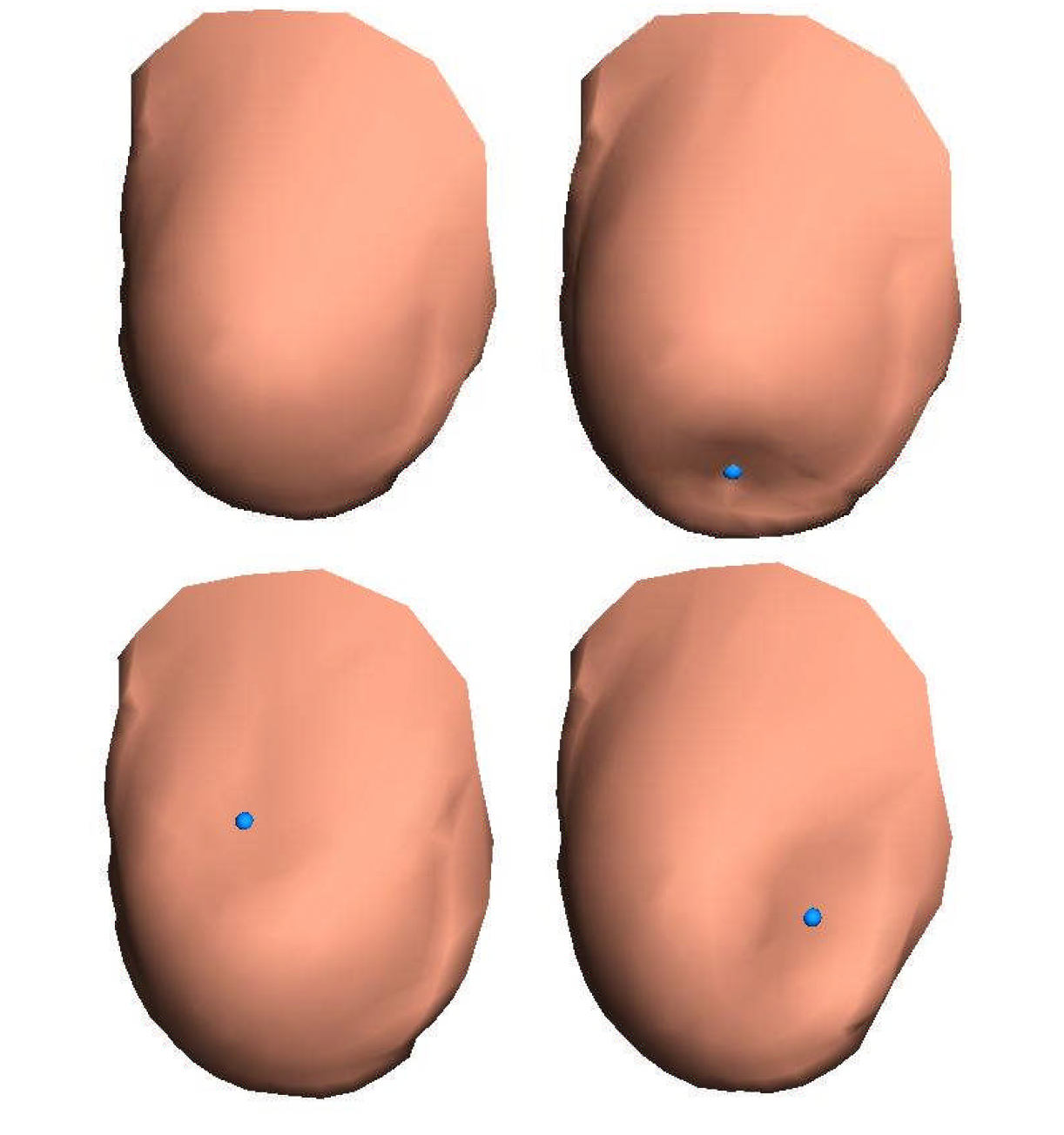
My doctoral thesis, Soft Volume Simulation using a Deformable Surface Model (2009), investigated how soft objects such as breast tissue could be simulated realistically while still supporting real-time interaction. At the time, one of the central tensions in haptics research was balancing physical realism with computational efficiency. High-fidelity simulations were possible, but often too computationally expensive for real-time applications. Meanwhile, simpler models were fast but lacked convincing material behaviour.
The thesis explored how deformable surface models based on Mass Spring Systems (MSS) could be extended to better simulate elasticity, homogeneity, incompressibility, and global deformation effects without relying on computationally heavy volumetric methods such as Finite Element Modelling (FEM).
This work led to several publications during that period:
- Arnab, S., & Raja, V. (2008). A Deformable Surface Model for Soft Volume Simulation.
- Arnab, S., & Raja, V. (2008). A Deformable Surface Model with Volume Preserving Springs.
- Arnab, S., & Raja, V. (2008). Simulating a Deformable Object Using a Surface Mass Spring System.
- Arnab, S., Solanki, M., & Raja, V. (2008). A Deformable Surface Model for Breast Simulation.
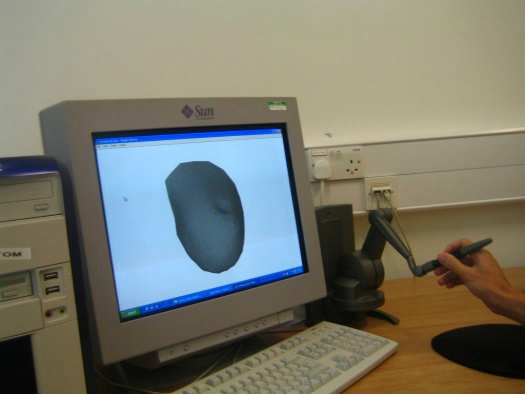
At the time, haptics research was deeply tied to medical simulation, surgical training, and virtual prototyping. The Phantom Desktop and Phantom Omni devices were iconic within research labs. We were experimenting with how virtual palpation could support breast assessment training, how force feedback could enhance realism, and how deformable models could better represent the behaviour of soft biological tissues.
One of the enduring motivations behind the work was the educational and ethical potential of simulation. As I wrote in the thesis, virtual training environments offered alternatives to practising on real patients, cadavers, or animals, while also allowing repeatable and safe hands-on experiences.
What is interesting now, looking back from 2026, is how the broader technological ecosystem has finally caught up with many of these ambitions.
The State of Haptics in 2026
Haptics today is no longer confined to specialist research laboratories. Tactile interaction has become embedded across consumer technologies, XR systems, gaming, robotics, automotive interfaces, healthcare, wearable technologies, and even remote collaboration platforms.
1. XR and Spatial Computing
The rise of immersive XR ecosystems has significantly accelerated interest in tactile interaction. Companies such as Apple, Meta, Sony, and HTC continue exploring ways to bridge the gap between visual immersion and physical sensation.
While many commercial systems still rely on vibrotactile feedback rather than full force feedback, there is increasing experimentation with:
- finger tracking combined with pseudo-haptics,
- ultrasonic mid-air haptics,
- wearable tactile gloves,
- soft exoskeleton systems,
- skin-stretch feedback,
- and adaptive resistance systems.
The ambition remains similar to what researchers envisioned two decades ago: reducing the perceptual divide between the virtual and the physical.
2. Medical and Healthcare Simulation
Medical simulation remains one of the strongest application areas for haptics. Surgical rehearsal systems, dental simulation, rehabilitation, physiotherapy, and telemedicine increasingly rely on tactile feedback.
What has changed is the integration of:
- AI-assisted simulation,
- cloud computation,
- physics acceleration,
- real-time tissue modelling,
- and mixed reality overlays.
The computational limitations we struggled with in the mid-2000s have been substantially reduced through GPU computing and modern physics engines. Yet the core research questions remain remarkably familiar:
- How much realism is enough?
- What level of tactile fidelity genuinely improves learning?
- How do we balance accuracy with accessibility and scalability?
3. Gaming and Consumer Interaction
Gaming has perhaps become the most visible mainstream expression of haptics. The PlayStation DualSense controller demonstrated how nuanced tactile feedback can significantly enhance immersion. Adaptive triggers, localised vibration patterns, and material simulation have become increasingly sophisticated.
But beyond entertainment, tactile interaction is now part of broader experience design:
- accessibility systems,
- mobile interaction,
- emotional communication,
- remote social presence,
- and multisensory storytelling.
In many ways, this aligns closely with my later work in serious games and playful experiences. Haptics is fundamentally about embodied interaction and experiential engagement.
4. Soft Robotics and Wearables
One of the most exciting developments has been the convergence between haptics and soft robotics. Flexible materials, smart textiles, pneumatic systems, and bio-inspired actuators are enabling new forms of tactile interfaces that feel less mechanical and more organic.
Wearable haptics has also matured considerably:
- tactile gloves,
- haptic sleeves,
- smart rings,
- shoes with force feedback,
- and lightweight tactile suits are increasingly explored across training, rehabilitation, and entertainment contexts.
5. AI and Adaptive Haptic Systems
AI-driven interaction is beginning to reshape haptics research itself. Machine learning is now being used to:
- predict tactile responses,
- personalise feedback,
- simulate material behaviours,
- optimise force rendering,
- and reduce computational overhead.
Back in 2008, much of our work focused heavily on manually balancing spring stiffness, deformation behaviour, and volumetric preservation. Today, adaptive systems can dynamically optimise these responses in real time. Check out this blog post on the top 10 tactile trends in 2026.
Revisiting Earlier Research
One aspect I appreciate more now is how interdisciplinary haptics research always was.
The work sat between:
- engineering,
- computer graphics,
- human-computer interaction,
- medical simulation,
- perception psychology,
- and experiential design.
Even my later transition into serious games, playful learning, XR, and co-creative systems arguably carried forward many of the same underlying questions:
- How do humans experience interaction?
- How do systems become embodied and meaningful?
- How do technologies support experiential engagement rather than passive observation?
In hindsight, some of the tactile and multisensory ideas we explored at the Serious Games Institute were early indicators of this broader trajectory.
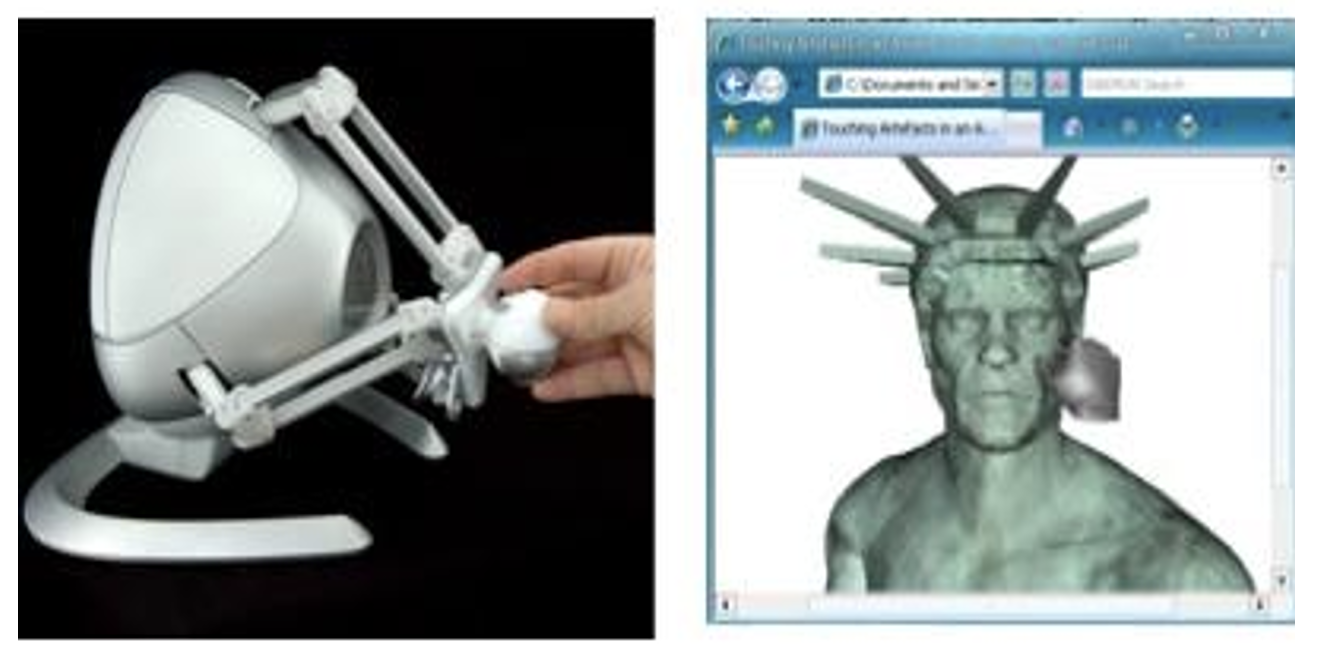
For example, our 2011 paper Tactile Interaction in an Ancient World on a Web Browser explored multisensory learning environments for cultural heritage using haptic interaction within the Roma Nova project. The work investigated how tactile interaction could complement visual immersion and experiential learning in virtual environments.
At the time, we were already asking questions that remain central today:
- Can tactile interaction enhance engagement and learning?
- How do we make immersive technologies more accessible?
- Can multisensory systems support deeper experiential understanding?
Those questions continue to resonate strongly across XR, game design, and playful systems research today.
The Technologies Changed, but the Questions Remain
Perhaps the most striking realisation revisiting this area in 2026 is that the field has evolved enormously technologically, yet many of the conceptual challenges remain surprisingly constant.
We now have:
- vastly more computational power,
- sophisticated XR ecosystems,
- AI-assisted modelling,
- wearable haptics,
- cloud rendering,
- and consumer-grade immersive platforms.
But we are still fundamentally exploring the relationship between:
- touch,
- perception,
- embodiment,
- realism,
- interaction,
- and human experience.
That remains deeply fascinating to me.
Although my research journey moved into serious games, playful systems, co-creation, and community-engaged design, haptics remains an area I continue to follow closely and with great affection. Revisiting this earlier work is both nostalgic and intellectually grounding. It reminds me how research trajectories evolve, intertwine, and often return to enduring human questions about interaction, experience, and meaning.
Sometimes, old research areas never really leave you.


