Game Science in Hybrid Learning Spaces (2020)
Game Science in Hybrid Learning Spaces presents a comprehensive approach to designing learning through games and play across physical, digital, and hybrid environments. Published in 2020, it remains a key reference for understanding how playful and game-based approaches can support meaningful, inclusive, and scalable learning and intervention design.
Core Contributions
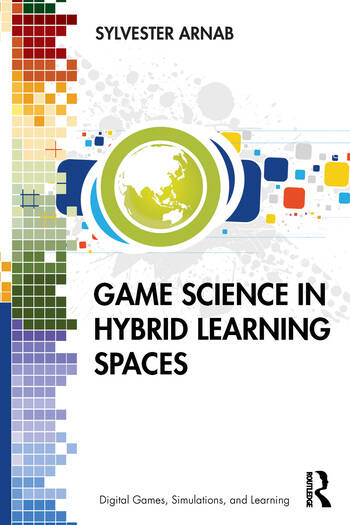
This work extends well beyond a single framework and establishes a holistic design approach for game-based interventions:
- Hybrid Learning as a Transformative Space
The book introduces hybrid learning as a way to break boundaries of space and time, connecting formal and informal, analogue and digital, and individual and social learning experiences into a continuous ecosystem. - Transdisciplinary Design for Intervention
It positions game design as a transdisciplinary methodology, integrating insights from education, psychology, design, and computing to create purposeful interventions that respond to real-world challenges. - Beyond LM–GM: Expanded Design Thinking
While introducing the Learning Mechanics–Game Mechanics (LM–GM) framework, the book expands this into a broader design approach that connects learning, gameplay, and context, supporting more adaptive and situated experiences. - Motivation and Player Experience
Building on Self-Determination Theory, the book develops a motivation-oriented perspective on design, embedding autonomy, agency, and engagement into learning experiences. - From Design to Practice
Through practical examples, it demonstrates how these approaches can be applied across education, training, and community contexts, bridging theory and real-world implementation.
Research Connection
The book underpins my ongoing research in:
- Ludic and playful design as a methodological approach
- Game-based interventions for social and educational impact
- Community-engaged and co-creative practices
- Value-based and transdisciplinary design
These ideas continue to evolve through initiatives such as GameChangers, ACES, and FAiR, as well as current work on playful systems for addressing complex societal challenges.
Why It Still Matters
The book anticipated many of the shifts now shaping education and research:
- The move towards hybrid and distributed learning environments
- The importance of engagement, motivation, and experiential design
- The need for integrated, systems-oriented approaches to learning and intervention
It provides both a conceptual foundation and a design-oriented framework for anyone looking to use games and play to create meaningful impact.
Available from:
Citation
Arnab, S. (2020). Game Science in Hybrid Learning Spaces. Routledge.

