Over the years, one of the most meaningful aspects of our work has been watching how ideas evolve through practice. What started as an exploration of game design and playful learning has grown into a connected ecosystem of projects, communities, and interventions.
The GameChangers initiative has never been a single project. It is a platform for experimentation, where research, teaching, and community engagement come together through play and design.
Where It Began: Designing Through Play
GameChangers began with a simple but powerful premise:
What if learning could be designed through making, playing, and co-creating games?
Early work focused on:
- Game design thinking as a pedagogical approach
- “Learning by designing” as a process for creative problem solving
- Opening up game creation to non-experts across disciplines
This was already a shift away from traditional instruction towards participatory, design-led learning. It positioned learners not as consumers, but as creators.
Over time, this approach demonstrated that game design could act as a bridge across disciplines, fostering collaboration, empathy, and shared understanding.
Expanding into Projects: From Practice to Research
As the initiative matured, it became a driver for funded research and international collaboration.
Projects emerging from this work extended the core ideas into new contexts:
- CreativeCulture explored cultural and creative applications of playful design
- ACES focused on community-centred resilience and social impact
- Beaconing translated playful design into scalable, technology-enabled hybrid learning systems
- FAiR extended into art–science–community collaborations for environmental awareness
Check out the full list of projects. These projects reflect a key progression: from designing activities to designing systems and interventions.
GameChangers became a methodological backbone, supporting projects that integrate play with education, culture, health, and sustainability.
Play, Inclusion, and Institutional Change
A significant evolution in recent years has been the application of playful and game-based approaches to inclusion, equity, and institutional transformation.
Projects such as I-HEDU and Bridge-HE extend this work into higher education contexts, focusing on:
- Creating safe, participatory spaces for marginalised and underrepresented voices
- Using playful and creative methods to support expression, dialogue, and agency
- Informing institutional practices and policy through lived experiences
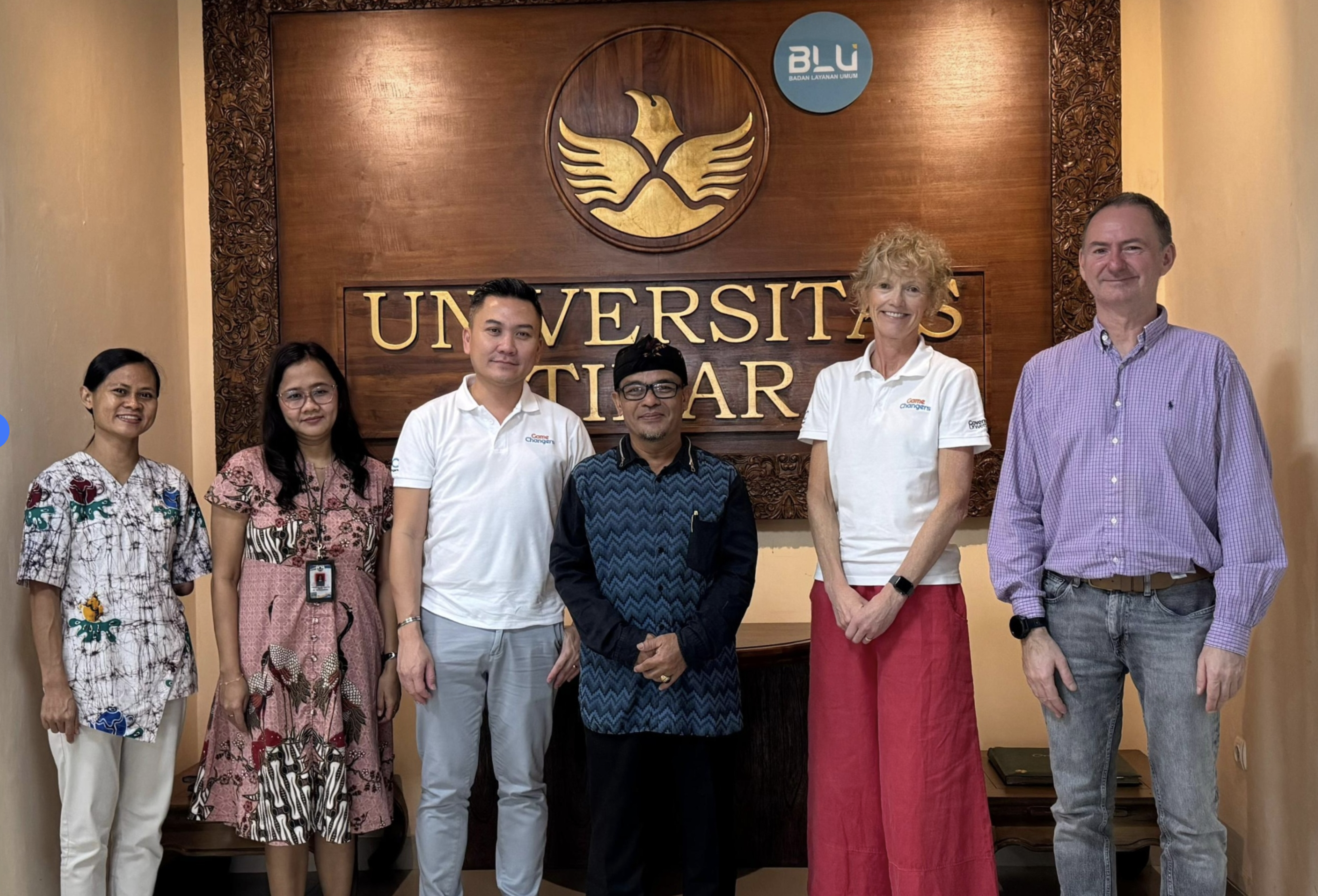
In these contexts, play is not about engagement alone. It becomes a method for surfacing perspectives that are often unheard, enabling more inclusive and equitable approaches to decision-making and system design.
From Learning to Participation and Social Impact
A major evolution has been the shift from focusing on learning outcomes alone, to participation, agency, and societal impact.
Across projects, we began to see that:
- Playful design enables dialogue and shared meaning-making
- Co-creation fosters ownership and long-term engagement
- Communities are not participants, but partners in design
This aligns with the broader aim of GameChangers to make game creation and playful approaches accessible and inclusive, particularly for underserved and marginalised communities.
In this sense, the work has moved towards play as a vehicle for change, not just learning.
Hybrid, Transdisciplinary, and Contextual
Another clear trajectory across the projects is the increasing emphasis on:
- Hybrid spaces (blending physical, digital, formal, informal)
- Transdisciplinary collaboration (Arts, Humanities, STEM, communities)
- Context-driven design (local cultures, needs, and environments)
Rather than applying a fixed model, projects adapt and evolve based on context. This reflects a deeper understanding that design is situated, and that meaningful impact comes from working within, not outside, communities.
A Global and Reciprocal Research Journey
What has become increasingly important is the international and reciprocal nature of knowledge creation.
Early research and innovation developed through UK and European contexts, often supported by collaborative programmes and networks. These foundations were then extended through sustained partnerships in South East Asia, including Malaysia, Indonesia, and Vietnam.
In these contexts, the work evolved through:
- Community-engaged and co-creative practices
- Frugal and context-sensitive design approaches
- Deep collaboration with educators, artists, and local communities
Importantly, these experiences did not remain local. They fed back into UK and European contexts, reshaping how we think about inclusion, participation, and design. This includes RE:PLAY, which is investigating playful learning in UK HEIs, and FAiR4All, which is translating FAiR’s research and practice outcomes into the UK context.
This ongoing exchange has strengthened the research, making it more grounded, adaptable, and globally relevant.
Expanding Horizons: South Africa and Beyond
More recently, this trajectory has expanded further through the development of the Ludic Design Lab in South Africa.
This initiative builds on the GameChangers approach to:
- Establish a methodological platform for playful, culturally grounded innovation
- Support capacity building for researchers, educators, and communities
- Integrate Indigenous Knowledge Systems and local contexts into design practice
It reflects a continuation of the journey: not exporting models, but co-developing approaches that are locally meaningful and globally connected.
At the same time, collaborations across Europe and other regions continue to evolve, reinforcing the networked and transnational nature of this work.
A Living Ecosystem of Practice
Today, GameChangers is best understood as a living ecosystem:
- A research programme generating theories and methodologies
- A practice-based platform for experimentation and co-creation
- A global network of collaborators and communities
It continues to shape how playful and game-based approaches are used to engage with complex challenges across education, society, and policy.
Looking Forward
Reflecting on this journey, what stands out is not just the diversity of projects, but their continuity and connection.
Across contexts, the same core principles remain:
- Design as a collaborative, participatory process
- Play as a means of engagement, exploration, and dialogue
- Learning as something that happens across spaces, systems, and communities
From Europe to Southeast Asia, back to the UK, and now expanding into South Africa and beyond, the work continues to evolve through exchange, reflection, and co-creation.
It is not a linear progression, but a reciprocal and growing network of practice.
And perhaps that is the most important outcome: not just a collection of projects, but a shared way of working that continues to open up new possibilities for how we design, learn, and create impact together.


1 Comment